
Purchased: May 2020
Used on: Sea kayak expeditions, wild camps, and coastal trips across Scotland and the North of England
Five Years, Hundreds of Miles of Paddling
(Affiliate link)
I’ve been cooking on this stove since May 2020, and in that time it’s been with me on some of the best trips of my life- a three-day circumnavigation of Raasay and Rona off the Scottish mainland, island hopping around Arisaig and a full circumnavigation of the Isle of Bute. Days regularly running to 40 kilometres of paddling, wild camps on rock ledges and beaches, thunderstorms, swell, wind, and on the Summer Isles in July 2025 the most catastrophically bad midges I have ever encountered in my life. Through all of it, the Dragonfly performed.
That’s the review, really. But here’s the detail.

Why Liquid Fuel?
The Dragonfly runs on white gas, kerosene, diesel, and petrol. That flexibility is the whole argument for it. I have petrol around constantly for the lawn mower, the chainsaw, general land maintenance. Being able to top up the stove bottle from the same stock I’m already running is genuinely convenient in a way that’s hard to overstate.
It’s also good to know you can easily get more cooking fuel wherever you are in the World.
Gas canister stoves work fine. But unless you’re doing a single day trip, you always need a spare and I know myself well enough to know I’d resent the constant purchasing. With petrol, there’s no calculating how much gas is left in a canister, no anxious rattling at camp. You look in the bottle and you know.
If you’re an occasional user going out a few times a year, a gas stove is probably the better choice. Simpler, lighter, no technique required. The Dragonfly needs a lot more practice and commitment to use happily.
What It Does Well
It’s powerful. When it’s running properly, it sounds like a small jet engine. Water boils fast, which after a long day on the water matters more than you’d think.
It’s robust. Five years of being stuffed into dry bags and kayak hatches, and it hasn’t missed a beat.
It’s economical. Petrol is cheap. No fuel goes to waste at the end of a trip – whatever’s left in the bottle goes straight into the car or the mower.
It’s adjustable. The Dragonfly gives you genuine flame control. This is useful – you can maintain just enough heat to keep your boil in the bag products at temperature without boiling over. It also comes in very handy if you are frying.
It’s genuinely good fun to use. There’s a ritual to it. Once you’ve got the technique down, lighting it feels satisfying. It feels a bit dangerous, there’s every chance of singeing your eyebrows each time you light it if you are not careful.
The Honest Downsides
Petrol is flammable and it smells. If something goes wrong with containment especially in a kayak hatch or rucksack, it can contaminate kit in a way that gas never would. I keep it in a dedicated dry bag and have never had a problem, but it requires thought.
There’s more to go wrong than a simple gas stove. More components, more maintenance. And the technique takes practice. The first few times you light one, it’s not intuitive.
Premium petrol is worth using. I believe the better detergent additives make a real difference to how cleanly it burns, and fresh petrol works noticeably better than old stock. I believe MSR would prefer you to use dedicated stove fuel for optimum longevity but as I say, I’m in year 6 of mine with no issues.
If you want the lightest possible kit, this is probably not for you – a small gas stove would take up less space and weigh less. This is not so much of concern for my kayaking trips.
How to Use It — The Technique
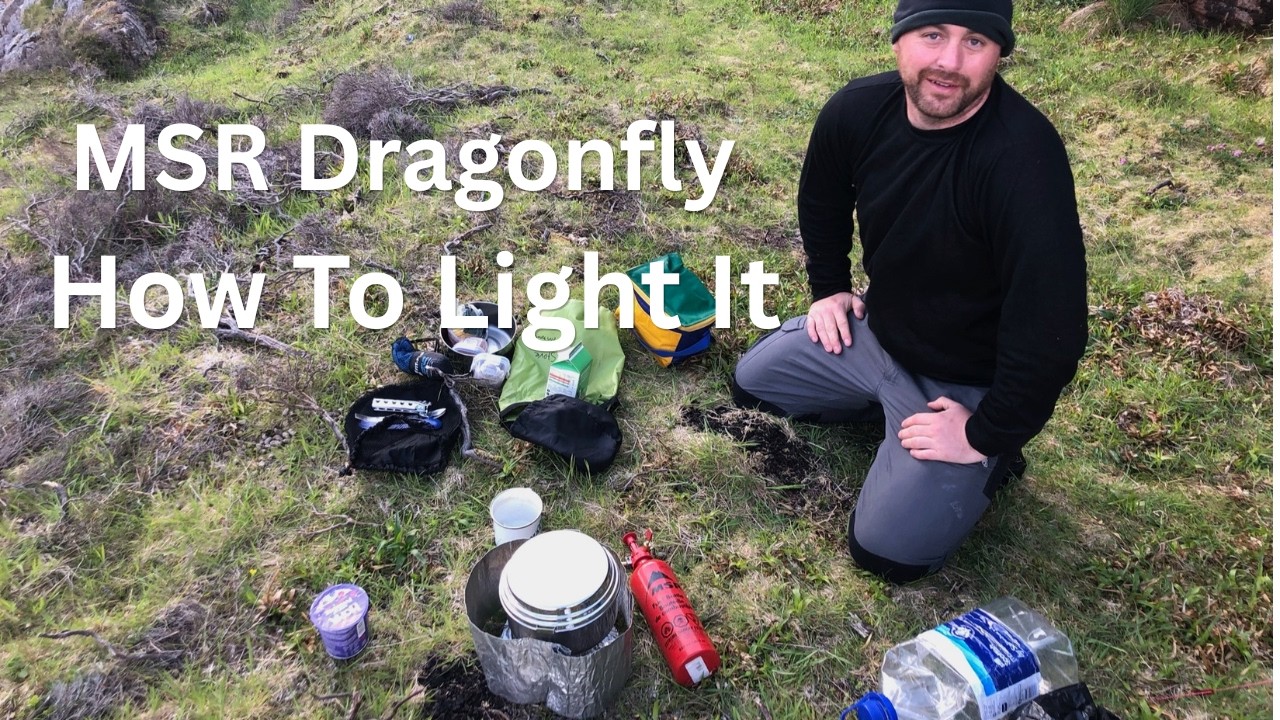
Turn the dragonfly stove body upside down and shake it for sixty seconds before use. There’s a small pin inside the jet that bounces around and clears carbon deposits. Shake again after use for the same reason.
Pump approximately 20 – 30 times to pressurise the bottle.
Release a tablespoon of petrol into the small dish beneath the burner, then close the valve. Light the petrol in the dish and let it burn for around 60 seconds — this heats the metal of the jet, which is what allows the fuel to vaporise properly. Then slowly reintroduce flow. Not too much. Let it catch. When the flame shifts from yellow-orange to blue, it’s running correctly. Give it full flow and let it go.
Give the bottle an occasional pump while cooking to maintain pressure.
When you’re done, turn off at the bottle rather than at the stove. This lets the fuel line dry out, which reduces drips and smell.
I don’t generally go on kayak expeditions by myself and my friend Nick has exactly the same stove. That means that if one of us breaks a pump or similar we’ve automatically got spare parts and spare fuel. If I was going solo much I’d perhaps be tempted to get something simpler.

The Verdict
The MSR Dragonfly suits a particular kind of person doing a particular kind of trip. If you’re spending multiple days out, you’re already carrying petrol, and you’re willing to learn the technique — it’s an excellent piece of kit. Reliable, powerful, and satisfying to use. It’s been on every meaningful trip I’ve done in the last five years, and I’ve never once wished I’d brought something else.
As an Amazon associate, I earn a small commission from qualifying purchases but they do not cost you a penny extra.
I buy all my own gear and write independent reviews. If you found this helpful, buy me a coffee.
Leave a Reply