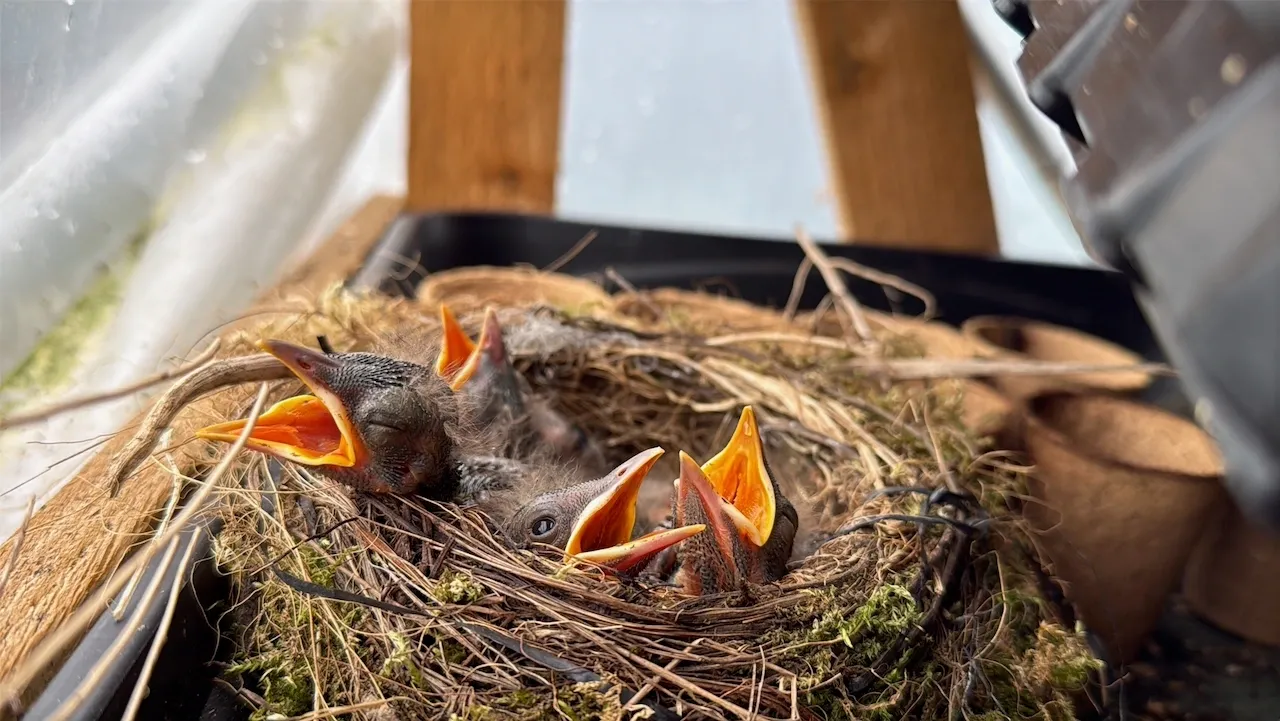
The wagtails chose our logshed. It’s right outside our kitchen door and we’re in and out non-stop. They must have priced that in and decided it was worth it. Perhaps they were more confident than their peers, or at least more able to balance the risk versus reward.
There was a cold snap in the middle of May. The heating was off for the summer, so I went to get some wood for the stove. I saw the nest, set in the air gap between two stacks of logs, full of tiny eggs. We decided we could manage without the logs after all.
As I say, we are in and out all the time, so I popped my head into the shed every day or so to see how they were doing. I missed them hatching, but soon enough there were five balls of black fluff with enormous yellow beaks and beady eyes looking back at me.

The mum and dad visited their babies about once a minute on average. I could see them through the window. They seemed to work as a team: one sat on the ridge of next door’s house keeping watch, the other flew into the nest with a beakful of long-legged insects. They were cautious, constantly scanning for danger. I guess there’s a lot of that: cats, foxes, bigger birds, humans. I felt like we were the least of their worries. I hope so.

One of them took a liking to the roof bars of my car, so I parked it alongside the shed for them. That went down very well. It had a white stalactite of approval running down the window within a day.
The logshed is built with two compartments separated by wide-gapped slats. On around day 6 of their lives, I popped my GoPro through from the other side and left it running.
The mum and dad were back feeding within 10 minutes. When I reviewed the footage, I could tell when they were about to arrive because the audiogram showed a spike in volume. The chicks could hear or sense the imminent arrival of a parent and ramped up their noise. They also seemed to be electrified at that point, their beaks thrust into the air, gaping open, demanding. The adults fed one or two chicks on each visit. They seemed to remember whose turn it was.
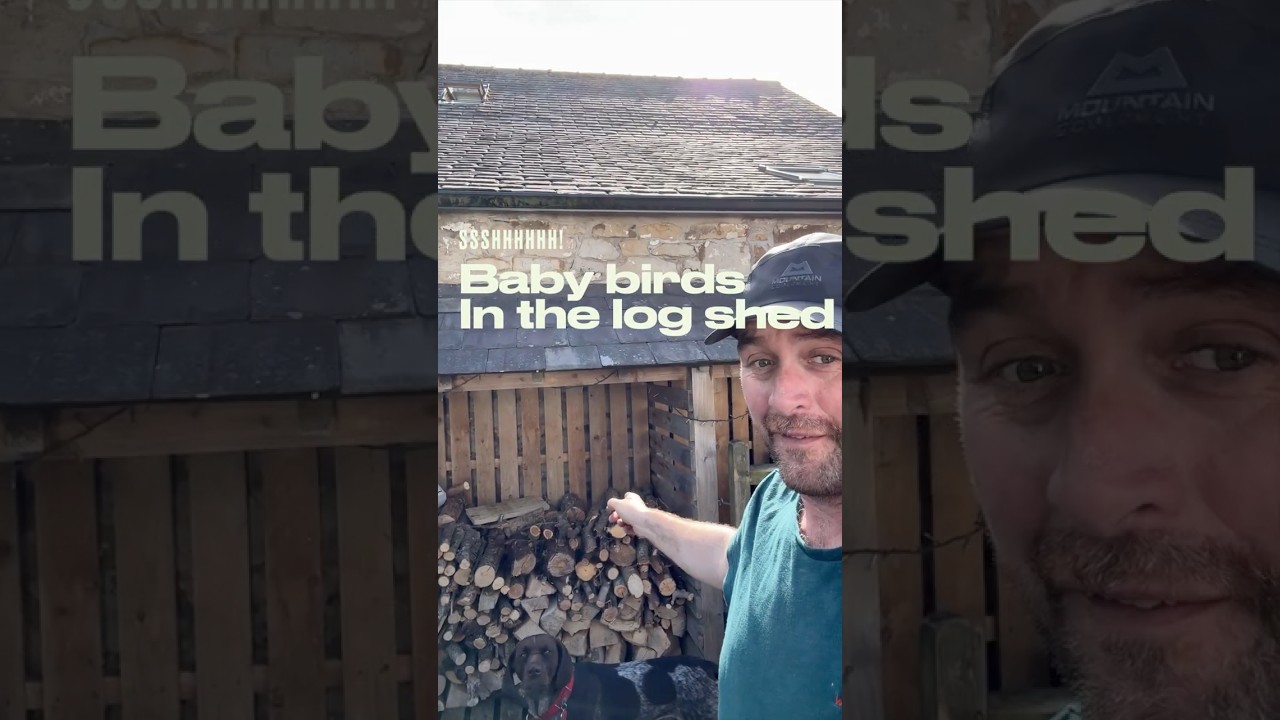
I noticed an adult flying away with what looked like a white egg in its beak and thought nothing of it. As I watched more footage, it happened again and I saw that I was wrong. One of the babies was fed, then turned around 180 degrees and presented its bottom to the adult before excreting a white sack straight into the waiting beak of the grown-up. The adult took it and flew off. I had to watch and rewatch that, and then do some research, but evidently faecal sacks are a thing. It makes total sense. The nest would soon get infested with parasites and attract predators if the waste were allowed to accumulate. Apparently, the parents also regularly eat it themselves.
On the 16th day, I noticed them as I came back from walking my dogs and took a quick photo on my phone. They looked different, expectant in some way. Later on, my neighbour asked if they had fledged, as he had seen several baby wagtails in his garden. He took these photos. When I checked, they had all gone. I was surprised how much I missed them, I kept checking the empty nest when I walked past.


I thought that was our bird drama for the year. Then the blackbirds moved into the polytunnel.
There were five eggs this time, much bigger than the wagtails’.
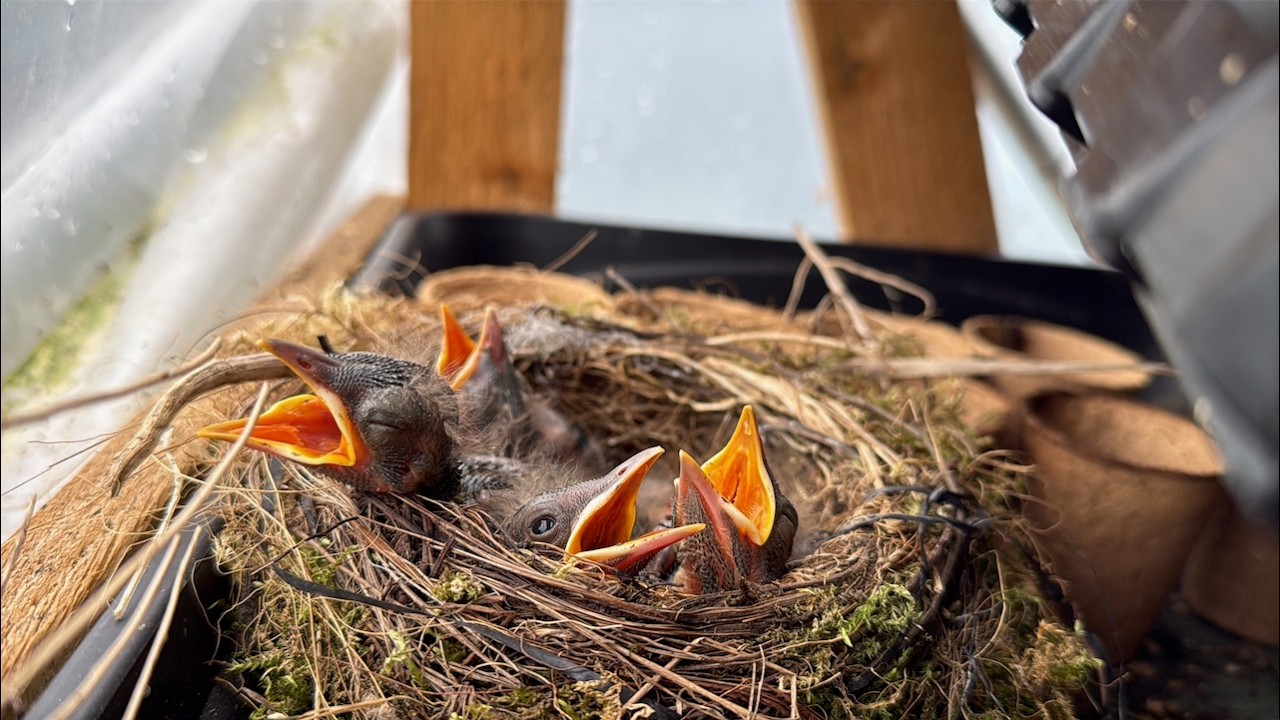
I grabbed a quick film of them whilst the mum and dad were away, you can see there were 3 eggs still to hatch. I left the GoPro pointing down at them from the planting shelf above and captured one of the eggs hatching. The babies looked like little aliens or dinosaurs. Huge bulging eyes that stayed shut. Wrinkly, see through skin. No wings yet, just stumps. They were unable even to raise their heads
I caught another noteworthy bowel movement, again it was taken away immediately by a parent. It was pure egg yolk, which actually makes sense considering where the baby bird had just been.
You can see their diet is also very different to the wagtails. The mum and dad are feeding them chunks of worm flesh in this clip. They are more aggressive, you can see the adult pecking the baby to prompt it to open its beak before ramming the food in.

After 6 days, they were unrecognisable – clearly now young birds with long yellow beaks, feathers and wings. Eyes open now, looking for the next meal delivery.
I noticed one of the babies wasn’t raising it’s head up for feeding. It was smaller than the others. It disappeared overnight. By the end of the 7th day, I could only see 3 babies.
By the evening of the 8th day, only one remained. There were no feathers or signs of anything happening. The parents were still feeding the baby. We set up a trail cam to monitor overnight and caught this rather overweight ginger intruder. We think he must have been responsible.

We kept the polytunnel shut overnight after that, the adult birds could still slip in and out under the door.

As far as I know, the little one made it. I had to go away for the weekend but my neighbour kept an eye on him. He had flown onto the tomato plants overnight and was gone within an hour. We haven’t seen him since.
I won’t forget these two families. They were tiny, frantic, filthy, vulnerable and completely committed to the job of being alive. With so many dangers, predators and points of failure, I found myself deeply respecting them. Without doubt, they put 100% effort into their lives. I’m not sure I can always say the same.


Leave a Reply