Our house is not connected to the main sewerage network. We have a compact “processing unit” halfway down the garden. The output is held in a large green plastic underground tank, shaped like a light bulb. A compressor, housed in a nearby kiosk, dispenses air from the bottom of the tank. I am told this allows aerobic bacteria to break down the sludge.
I set a reminder on my calendar to have the tank emptied every two years. I also have a standing order to transfer £10 per month into my “sewerage savings account” on payday. This is no coincidence, because the cost of emptying the tank is £240. This year we had achieved a modest excess of £7 or so, owing to the relatively high interest rates. I haven’t yet decided what to spend that on.
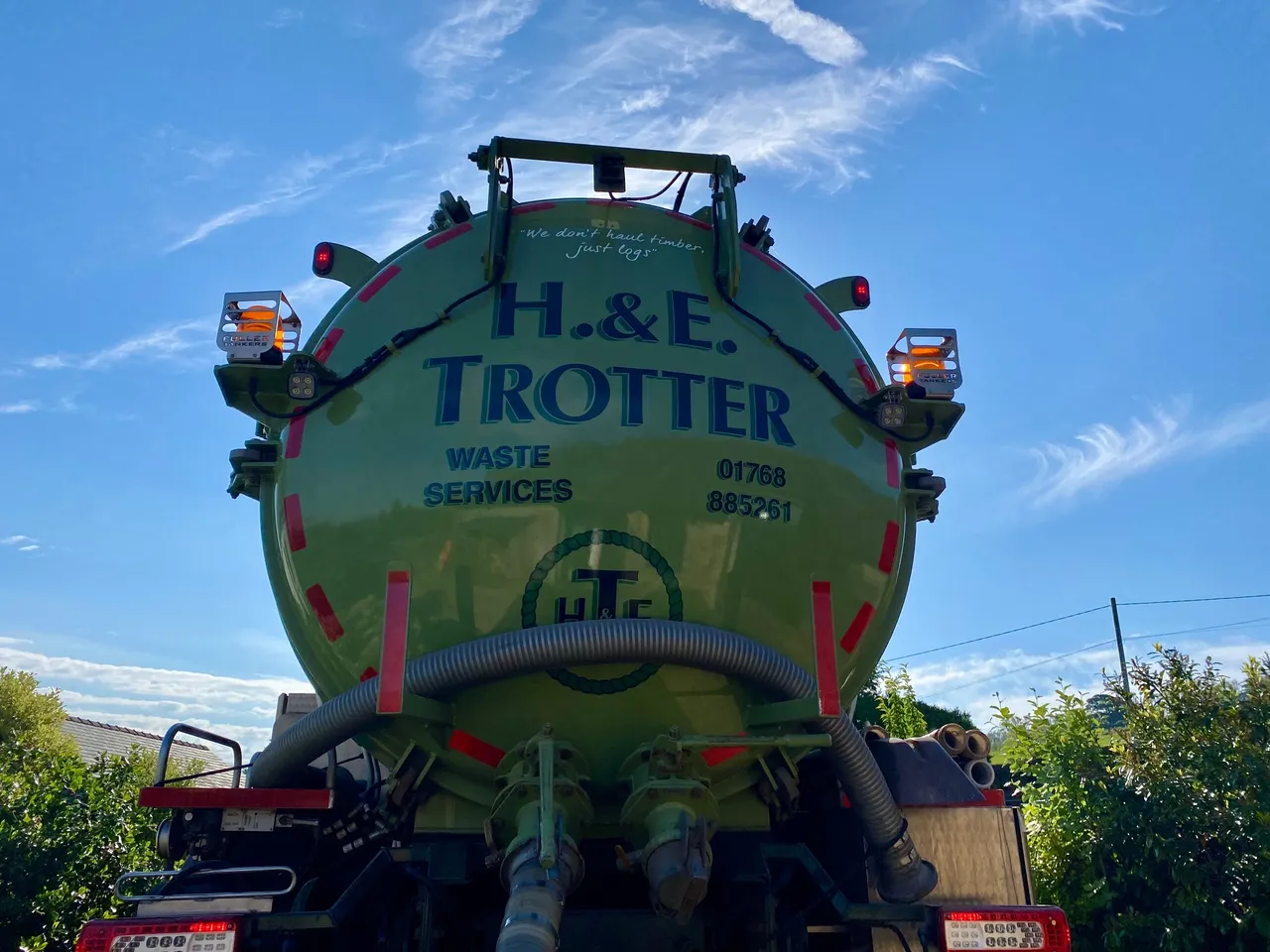
Today was the day. A large, non-articulated green Volvo tanker arrived just as I was eating my porridge oats. I would share a photograph of it, but unfortunately it had a somewhat interesting tagline painted below the company name — a play on the word logs. I will say no more about that.
The driver–operator was talkative. He was rightly proud of his machine and his company. He told me they have rented land from a nearby farmer, where their vehicles are emptied. They have installed a machine through which the untreated effluent is passed. It contains a rotating sieve that removes what the driver described as “rubbish.” I think I know what he meant, but it’s not really a polite thing to discuss, so I’ll stick with his phrase. I wanted to ask what happens to the rubbish, and what the most unusual item found has been, but it would have been a pity to interrupt his flow.
He went on to explain that the resulting mixture of liquid and appropriate solids is transferred into a large vertical settlement tower—of which there are three. Once a tower is full, an entry is made in a ledger and it is left for one month. It can then be spread onto nearby farmland as a form of fertiliser. The driver said they have given the farmer one of their old umbilicals to help with that. He gave me a knowing smile as he said this, indicating that I was now permitted to share a little of his tradecraft.
He also mentioned that he can assemble a hose up to 100 metres long if a customer’s sewage tank is far from the road. He said it is a lot easier to suck downhill. His favourite tank, however, is up a steep hill from a farm track. He told me that if the contents are not too crusty, it will virtually siphon itself into his tanker without needing the pump.
When my tank was empty, he asked to use my garden hose. He cleaned what I now know is called the scum baffle and the aerator of my tank. He then used it to clean the outside of his vacuum hose, sending clean water down it for about a minute with the pump running. He explained that this was to prevent any muck leaking out when the hose was disconnected and loaded back onto the truck.
All in all, a five-star experience, and I’m already looking forward to May 2026. I shall try to think of all my questions in advance next time.
Thanks for reading. If you enjoyed this report, I’d love to hear from you — just drop me a comment below.
Leave a Reply