
I’ve enjoyed visiting my in-laws a lot more since they moved to the countryside a few years back.
Whenever I walk my dog from their place, I pass a Royal Observer Corps Cold War monitoring post. It’s been decommissioned since 1991. Sat in the corner of a farmer’s field next to a busy A road, you wouldn’t really know it was there.
There’s space for a couple of cars just off the road. Most people who park there have no idea how close they are to a Cold War time capsule. Takeaway wrappers, NOX bottles and a sadistic-looking Richard III discourage you from taking the narrow path that leads up to it.
There’s a concrete box rising from the ground with three steps built into it. A green metal lid sits on top. It has two hasps, one on each side where it would once have been locked, but they’re long since cut. It still opens easily, well designed with a counterweight, though these days it makes a painful graunching sound.
Under the lid is a white-painted, concrete-lined shaft with a metal ladder set into the far wall. It goes down about fourteen feet into damp-looking darkness. I went down for another look on Sunday. This time the lid wouldn’t stay open, so I let it close gently. There was still light getting in, so there must have been air.
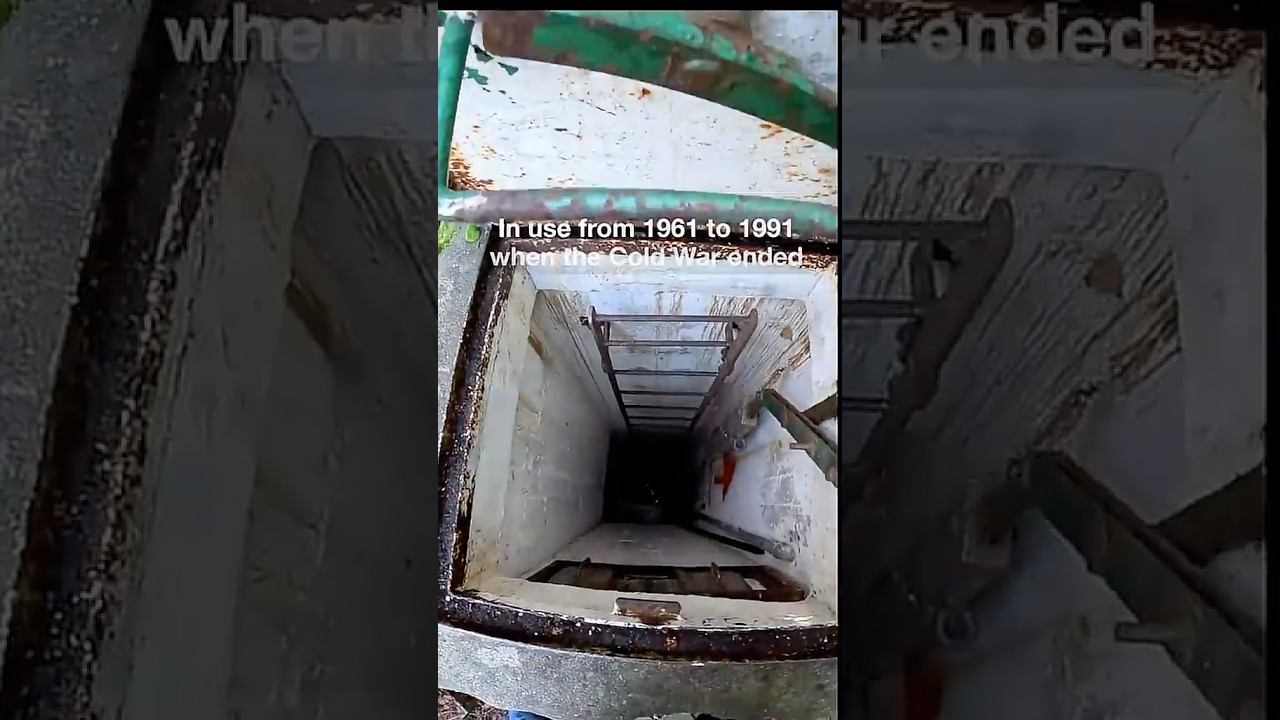
I climbed down halfway; it was getting dark. My imagination ran away with me, wondering if there was anyone waiting for me down there. I held my breath and listened. When I switched on my torch, I could see where I’d be landing, so I carried on.
At the bottom there’s a toilet or store cupboard on one side and the actual bunker on the other. Only a small space, about the size of a single garage. The walls were once white but are now covered in graffiti. The floor was a mess of smashed-up wooden pulp – presumably what’s left of the doors and shelves. It had a musty, dirty stench. Surprisingly, I could still hear every passing vehicle on the road above. I’d expected silence.
I looked up at the metal flange on the ceiling that once held the monitoring equipment. Shining my torch into it, I saw a pipe running up to the surface.
There would once have been a wall of communications and recording apparatus. Now there are only a few wires and holes where it was ripped away when the post was decommissioned.
A minute or so was plenty. I appreciated the fresh air and sunlight when I lifted the hatch and climbed out.
I find it fascinating that there were so many of these things – one every eight miles or so, enough to triangulate any blast and then measure the fallout afterwards. They were staffed by local volunteers; once a month they’d unlock the hatch and descend for training. In a real activation, three of them would have spent up to two weeks locked in, monitoring and sending signals.
Most have been sealed up or filled in, some lovingly restored. Others, like this one, are probably getting a bit dangerous thirty-four years on. I don’t think I’ll go back inside again.

Leave a Reply