Category: Writing

  • Field report – first visit to the scrap metal yard

    Field report – first visit to the scrap metal yard

    The office was behind a plastic framed door, the white UPVC lost underneath black fingerprints. The floor was now a mix of brown and green. If you so much as rested a mop on it, you would need to chuck the whole bucket of water away. The air was visceral — a mix of hot metal, oil, and sweat.

    A corridor led to the hangar with a serving hatch in the wall on the right so customers could interact with staff in the manager’s office. The hatch was protected by brown, varnished, horizontal, wooden bars. They seemed out of place, but I guess metal has a greater value in a place like this. The ends of the bars had neat corners; the centers were stained black and rounded by countless forearms and fingers.

    The manager was in his late twenties, wearing glasses, and neglected hair. His baggy cargo trousers were exactly the same hue as the old office chair that he seemed to be fused with. His face — expressionless. He let me wait at the hatch for 10 seconds or so before looking up. No greeting.

    “I’ve got some farm scrap, a bit of lead, and some copper.”

    A skinny guy was resting in a brown leather armchair. He glanced up from his phone and back again, his face registering slight contempt. I was brought up in the south, and my accent marks me out as an outsider even though I have lived here a long time.

    The manager’s voice was surprisingly high-pitched and scratchy as he sent me to the roller door around the side in as few words as possible.

    I drove around avoiding the potholes. An eager-looking lad in his mid-teens was waiting. His demeanor announced his status as the victim of the scrap yard social hierarchy. Two of his fingers had dirty black plasters around the knuckles. The metal of his steel toe caps was through the rubber of his boots.

    I gestured to my trailer and said, “All this to weigh.” His eyes widened, and he paused before saying, “And the trailer too?”

    “No, I’ll hang on to that. Just what’s in it, please.”

    He seemed momentarily embarrassed before giving a hint of a smile, perhaps grateful that I had answered him with more kindness than he was used to.

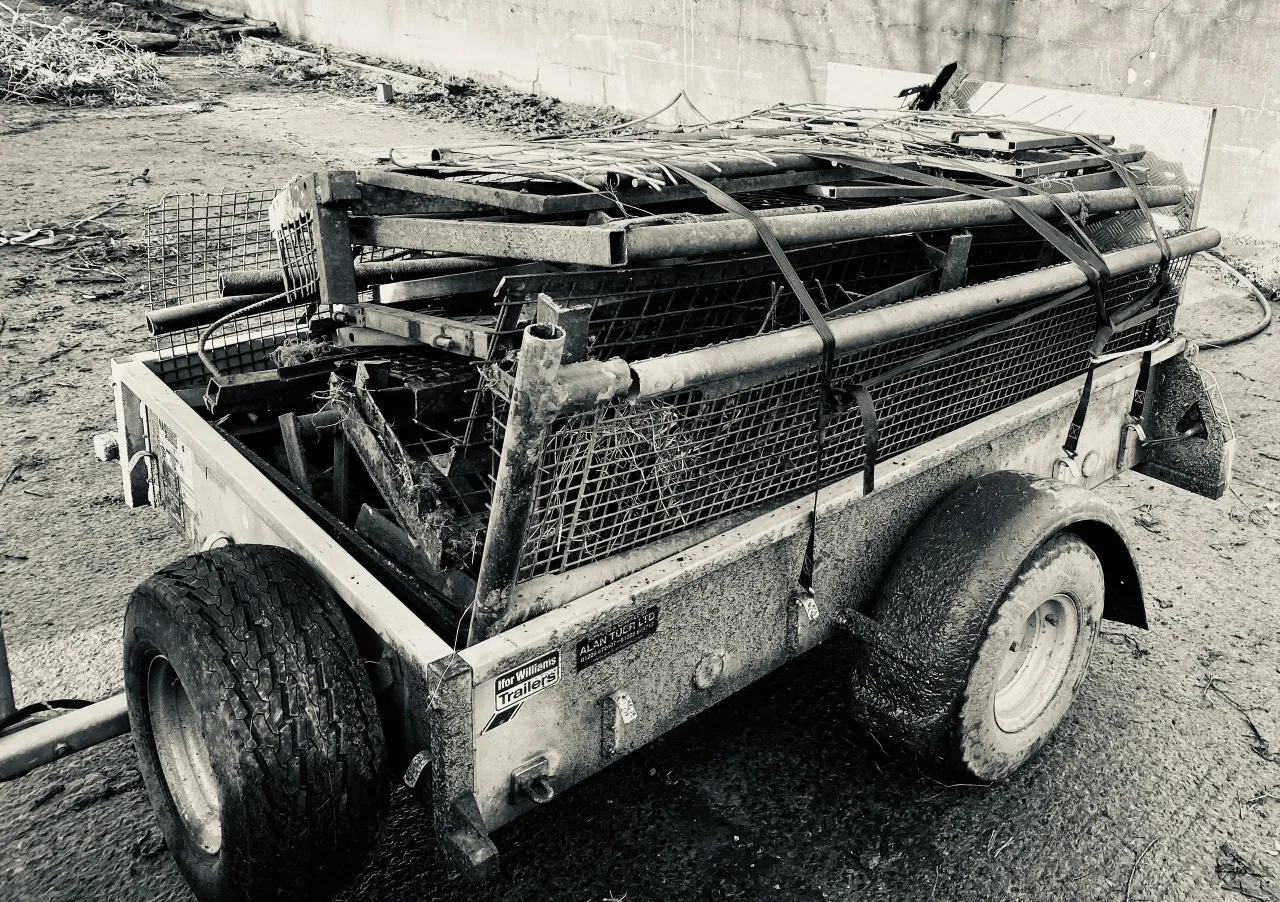
    I handed him an old bucket full of copper. He placed it into what looked like the battered bed of a wheelbarrow; it was actually a set of scales. 7.2kg. We did the same with some lead (5.8kg), brass (6kg), and some stainless steel (3kg). He touched a magnet to the stainless before accepting it, satisfied that there was no attraction.

    I drove onto the weighbridge and waited for his pale arm to emerge from the booth with a thumb up. I found a corner of the yard and dragged everything from my trailer. An excavator with metal jaws was nibbling away at an old school coach, delicately sorting the bodywork into separate piles. There were numerous vehicle gearboxes and engines laying around, old lawn mowers, transit vans, even a trampoline. I could have spent a whole day wandering around this amazing place.

    I reluctantly drove back onto the weighbridge some 300kg lighter. Back in the office, the manager already had a docket in his hand. His fingers moved quickly across the keys of an old Casio. Without looking up, he raised his empty, meaty hand toward me. I decided to wait for the courtesy of some words from his mouth. After a second or two, he turned his face toward me. His torso and shoulders remained facing the desk. There was no eye contact or expression.

    “ID and bank details.”

    I handed them over; they looked iridescent in this setting. After copying what he needed onto the docket, he passed everything back to me. I was delighted to see a total of £129 at the bottom of the page in his surprisingly neat handwriting.

    All in all, this was an excellent day out on so many levels. I’ve been back a dozen times or so, I highly recommend it to you.

    Thanks for reading. If you enjoyed this story, I’d love to hear from you — just drop me a comment below.
  • Taking the “Y” off Geography – A Morning on the Solway

    Taking the “Y” off Geography – A Morning on the Solway

    “The word Geography is a noun”

    But take the Y off the end and you end up with something altogether different: a verb, an adjective, still a noun, but above all, a quietly brilliant pastime.

    The Geograph project divides the United Kingdom and Ireland into 1 km by 1 km grid squares, 281,952 of them in total. Of those, 84.9% have been photographed by contributors, leaving 48,760 that remain blank.

    Today, I did my bit to reduce that number ever so slightly.

    The Solway Coast

    There are roughly 200 unphotographed squares along the Solway coast. The easy ones, like car parks, viewpoints and beach access points, were claimed years ago. What is left are the awkward ones: out at sea, cut off by channels, or reachable only when the tide decides to cooperate.

    This morning it did.

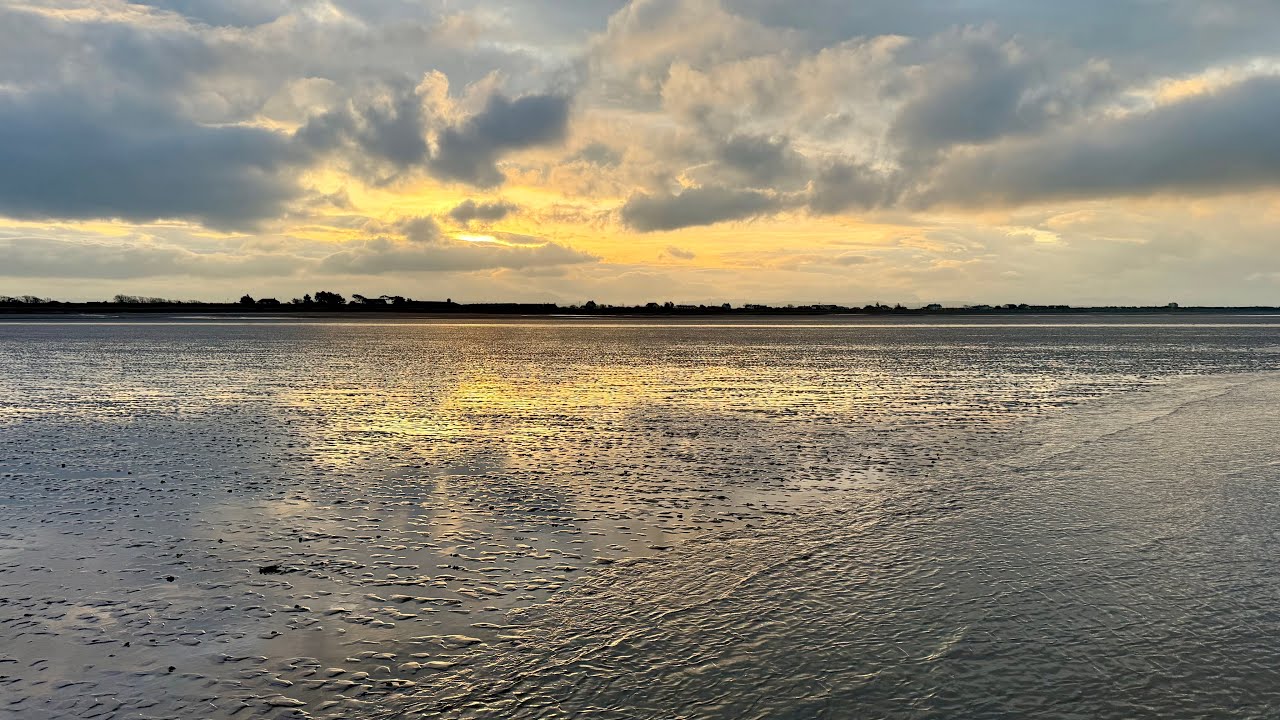
    Low tide was forecast at 07:55 with a depth of just 0.83 metres, about 1.2 metres lower than usual. On a coast this flat, that difference exposes vast areas that only exist for an hour or two each month.

    Today’s Adventure

    Armed with a GPX file of every unclaimed square within 30 km of home, I had identified two possibilities: NY0548 and NY0547. I recognised a moderate degree of risk in this, but thankfully I have decent safety kit from my other hobby, sea kayaking.

    I packed a VHF radio, LED beacon, satellite beacon and some boating shoes that would not mind getting wet. Everything went into a bright orange dry bag with a shoulder strap. Even if I ended up swimming, my keys would stay dry.

    I parked at Holme St Cuthbert, as close as possible to where I needed to be, and used my iPhone to guide me along the most direct route through channels, rock pools and mussel beds.

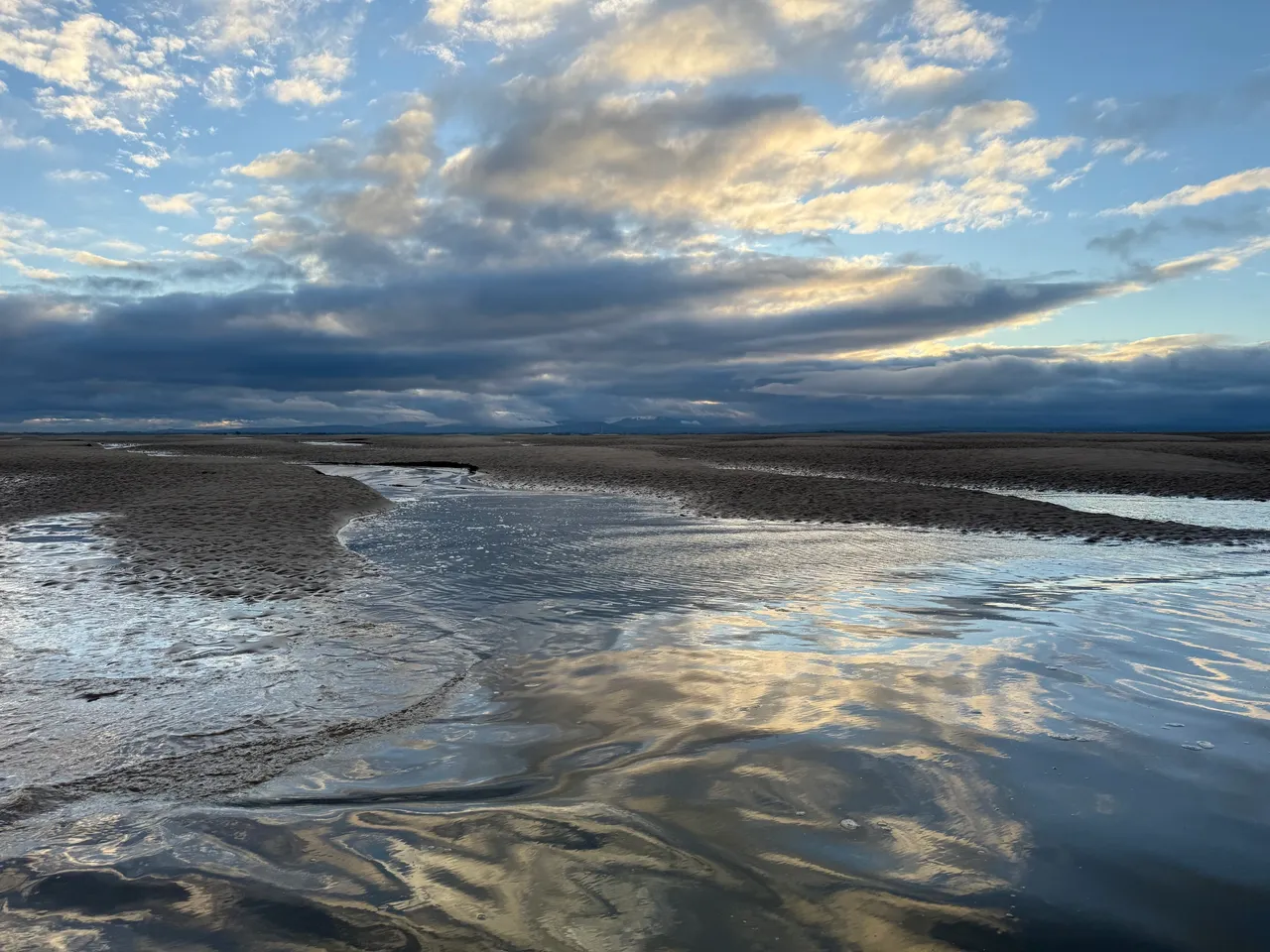
    Beach scene, wet sand reflects the blue sky and clouds.  The fells of the Lake District are visible on the horizon.
    Sea, sky, sand and the distant Lakeland Fells viewed from Stinking Crag

    2.6 km, about 1.6 miles later, at 08:12, I crossed into NY0548. The sea was running along the grid square, though not uniformly. I chose a thin spit of sand, walked along it and then waded out a little way. When I turned around, there was a small section of dry land within the square ready for me to capture. It got deep and cold quickly, but the view back towards the Cumbrian Fells made up for it.

    NY0547 lay 700 metres further, mostly surrounded by water and soft sand. Conscious of the tide beginning to turn, I jogged towards it, taking several more photos from within NY0548 as I crossed.

    I could see ’47 was already starting to disappear. A small area of raised sand remained on the far side of the grid line. I found another sliver of sand, stepped off the end, turned, and captured number two.

    Beach scene, shallow water covers the ground with a small slither of sand visible in the foreground.  The sun is obscured by clouds.
    Solway Coast from Stinking Crag

    A brisk walk back followed, carefully avoiding the darker, softer patches that signal quicksand. Some of the channels were deeper than they looked. I was glad I had worn shorts, but I would definitely be travelling home sitting on a towel to protect the upholstery.

    I took a quick drive down to Allonby to try for another promising square, NY0644, but I was about an hour too late.

    Back at Holme St Cuthbert, I put the drone up to see where I had been and what might be possible next time.

    The Coastline

    It is a beautiful, difficult place, constantly changing, part land, part sea, rarely still. At low tide, the high points rise like islands; at high tide, they vanish without trace.

    I have been walking and kayaking here for years and still get caught out sometimes, wading back through the channels that were not there an hour earlier. But that is the appeal of the Solway. It never quite reveals itself fully.

    Afterword

    Two new squares photographed, a few minutes of footage captured, and a reminder that adventure does not always require distance. Sometimes it only needs timing, curiosity, and a willingness to get your feet wet.

    youtube placeholder image

    Visit my Geograph profile page here 

    Field Kit from This Trip

    Everything I used on the Solway outing — simple, reliable, and tested by mud, tide and mild panic.

    Thanks for reading. If you enjoyed this piece, I’d love to hear from you — just drop me a comment below.

  • Sewage System

    Sewage System

    Our house is not connected to the main sewerage network. We have a compact “processing unit” halfway down the garden. The output is held in a large green plastic underground tank, shaped like a light bulb. A compressor, housed in a nearby kiosk, dispenses air from the bottom of the tank. I am told this allows aerobic bacteria to break down the sludge.

    I set a reminder on my calendar to have the tank emptied every two years. I also have a standing order to transfer £10 per month into my “sewerage savings account” on payday. This is no coincidence, because the cost of emptying the tank is £240. This year we had achieved a modest excess of £7 or so, owing to the relatively high interest rates. I haven’t yet decided what to spend that on.

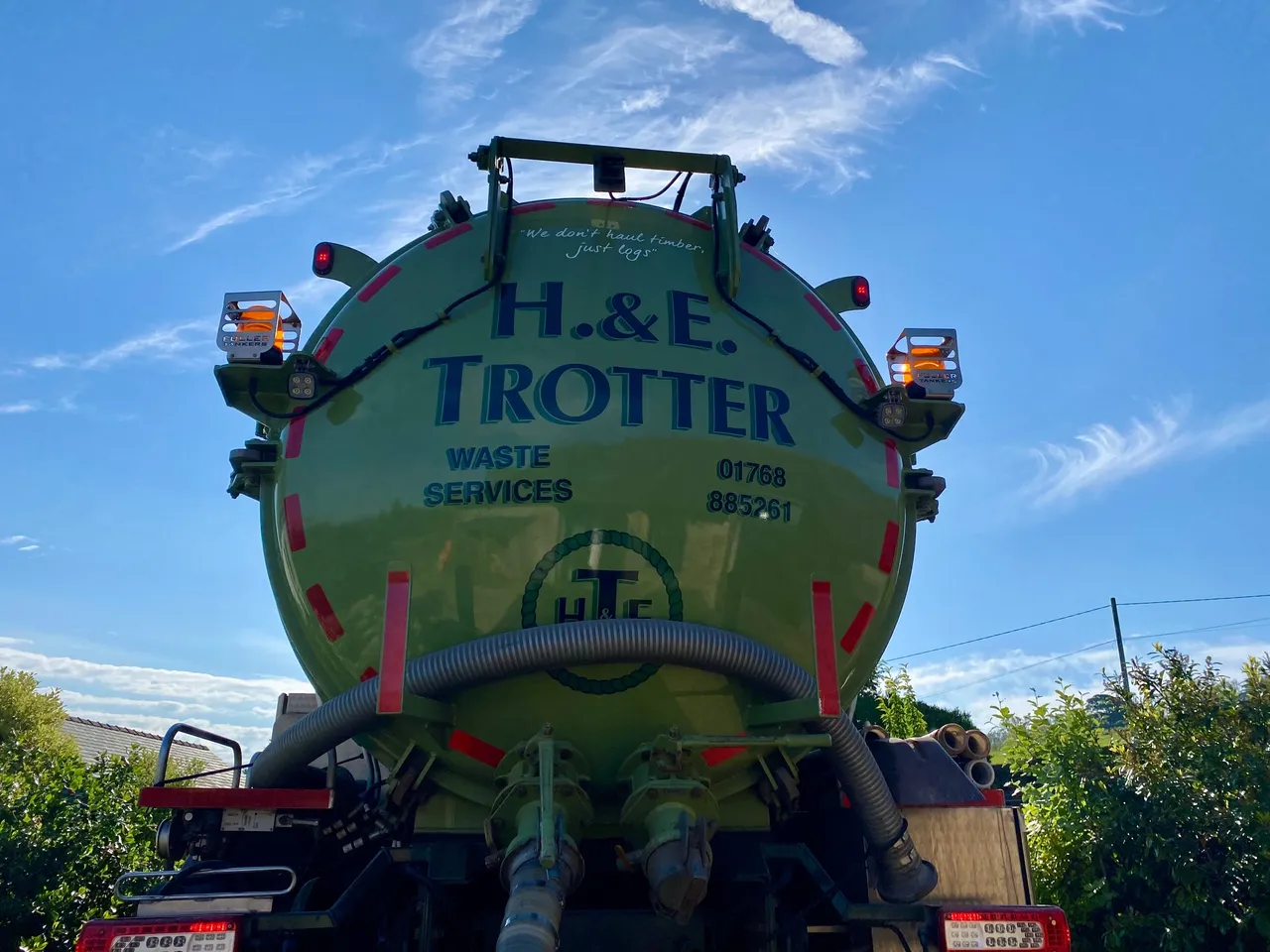
    Today was the day. A large, non-articulated green Volvo tanker arrived just as I was eating my porridge oats. I would share a photograph of it, but unfortunately it had a somewhat interesting tagline painted below the company name — a play on the word logs. I will say no more about that.

    The driver–operator was talkative. He was rightly proud of his machine and his company. He told me they have rented land from a nearby farmer, where their vehicles are emptied. They have installed a machine through which the untreated effluent is passed. It contains a rotating sieve that removes what the driver described as “rubbish.” I think I know what he meant, but it’s not really a polite thing to discuss, so I’ll stick with his phrase. I wanted to ask what happens to the rubbish, and what the most unusual item found has been, but it would have been a pity to interrupt his flow.

    He went on to explain that the resulting mixture of liquid and appropriate solids is transferred into a large vertical settlement tower—of which there are three. Once a tower is full, an entry is made in a ledger and it is left for one month. It can then be spread onto nearby farmland as a form of fertiliser. The driver said they have given the farmer one of their old umbilicals to help with that. He gave me a knowing smile as he said this, indicating that I was now permitted to share a little of his tradecraft.

    He also mentioned that he can assemble a hose up to 100 metres long if a customer’s sewage tank is far from the road. He said it is a lot easier to suck downhill. His favourite tank, however, is up a steep hill from a farm track. He told me that if the contents are not too crusty, it will virtually siphon itself into his tanker without needing the pump.

    When my tank was empty, he asked to use my garden hose. He cleaned what I now know is called the scum baffle and the aerator of my tank. He then used it to clean the outside of his vacuum hose, sending clean water down it for about a minute with the pump running. He explained that this was to prevent any muck leaking out when the hose was disconnected and loaded back onto the truck.

    All in all, a five-star experience, and I’m already looking forward to May 2026. I shall try to think of all my questions in advance next time.

    Thanks for reading. If you enjoyed this report, I’d love to hear from you — just drop me a comment below.