After 5 years of hard use I still rate this tool very highly
I’ve only broken one minor part – the spectacles tool and I got a replacement bit for £5 or so
Though you can get cheaper, you probably will not get better, it’s beautifully designed, a pleasure to own and use
Be aware not necessarily legal to carry in the UK
Situation – Why I Needed a Leatherman
I am one of those people who is constantly fixing, adjusting and generally fiddling with things. A lot of the time I am working away from my regular tools, having a Leatherman Wave+ with 18 different tools in my pocket is always useful.
When I bought it 5 years back, I had no idea how practical and durable it would be. If I lost it, I’d be ordering another one immediately.
Specification
The Leatherman Wave+ is the company’s best-selling multi-tool. It has 18 different functions, can be operated one handed and everything apart from the pliers locks into place (more on that later).
It is a masterpiece of design. It is pleasant to handle. I have to stop myself opening and closing it because it feels really good when you do.
Main features include:
• Long nosed pliers with wire strippers, cutters and a semi-circular serrated cut out for gripping and turning larger objects.
• Conventional cutting blade (7.42 cm) and a serrated blade for rope, webbing, seat belts etc (this is the most useful tool IMHO)
• Large flat bladed screwdriver suitable for prying open tins of paint etc.
• Nail scissors – good for cutting paper and thin materials. Can operate one handed
• Multi use file – diamond carbide on one side and rough metal on the other. Good for sharpening other tools / blades in the field.
• Wood saw blade- only little, good for pruning small branches or cutting through something of approximately finger thickness.
• Adaptable Posidrive or flat bladed screwdriver – take the tip out, turn it around plus you can get an accessory set to widen its scope
• Spectacles screwdriver (easily snapped, cheap to replace though)
• Ruler in centimetres and inches – max 8 inches
• Can and bottle opener. The can opener is very good to use – check my video out above.
Optional bit set
Mine came with a webbing sheath, but I chose to get the leather belt sheath instead. I now use the original sheath for the bit kit set.
My Verdict After Five Years of Daily Use
I still carry my Wave+ with me most of the time around the house and garden. I feel a bit naked without it. It is a fantastic bit of kit capable of helping me with an infinite array of problems.
It has been on all of my sea kayaking trips, usually sitting in a dry bag at the bottom of the kayak. It has been used to fix camping equipment and boats, cut rope, saw branches for firewood, remove a tick from my calf, cut up food, open tins and cut wires.
Around the house and in the field it has helped me with everything from wiring a plug to, just today, fixing a rotating cake stand for my wife.
I use the serrated knife most often for opening delivery boxes and cutting rope. Next most useful are the screwdrivers, then the pliers. I have hardly ever used the conventional knife blade, and the only time I tried to use the spectacles screwdriver for a bit of gentle prying it broke.
My Wave+ has developed a touch of orange rust around the joints. That will be my own fault for using it near the coast. It will come good again with a wipe from an oily rag.
Mine has had a hard life and it is still in great condition. I was able to get a new spectacles screwdriver blade for only a few quid.
Be Careful – Not Automatically Legal to Carry in the UK
You cannot carry any locking knife in a public place without a good reason.
Because each blade on the Wave+ locks into place, you need to take care with this. There are plenty of perfectly good and respectable reasons to carry one. Just make sure you have thought about it, as the penalties can be quite severe.
Verdict
Five years on, my Leatherman Wave+ has earned its place as one of my most trusted tools. It is solid, clever and endlessly useful, the sort of thing that quietly makes life easier every week.
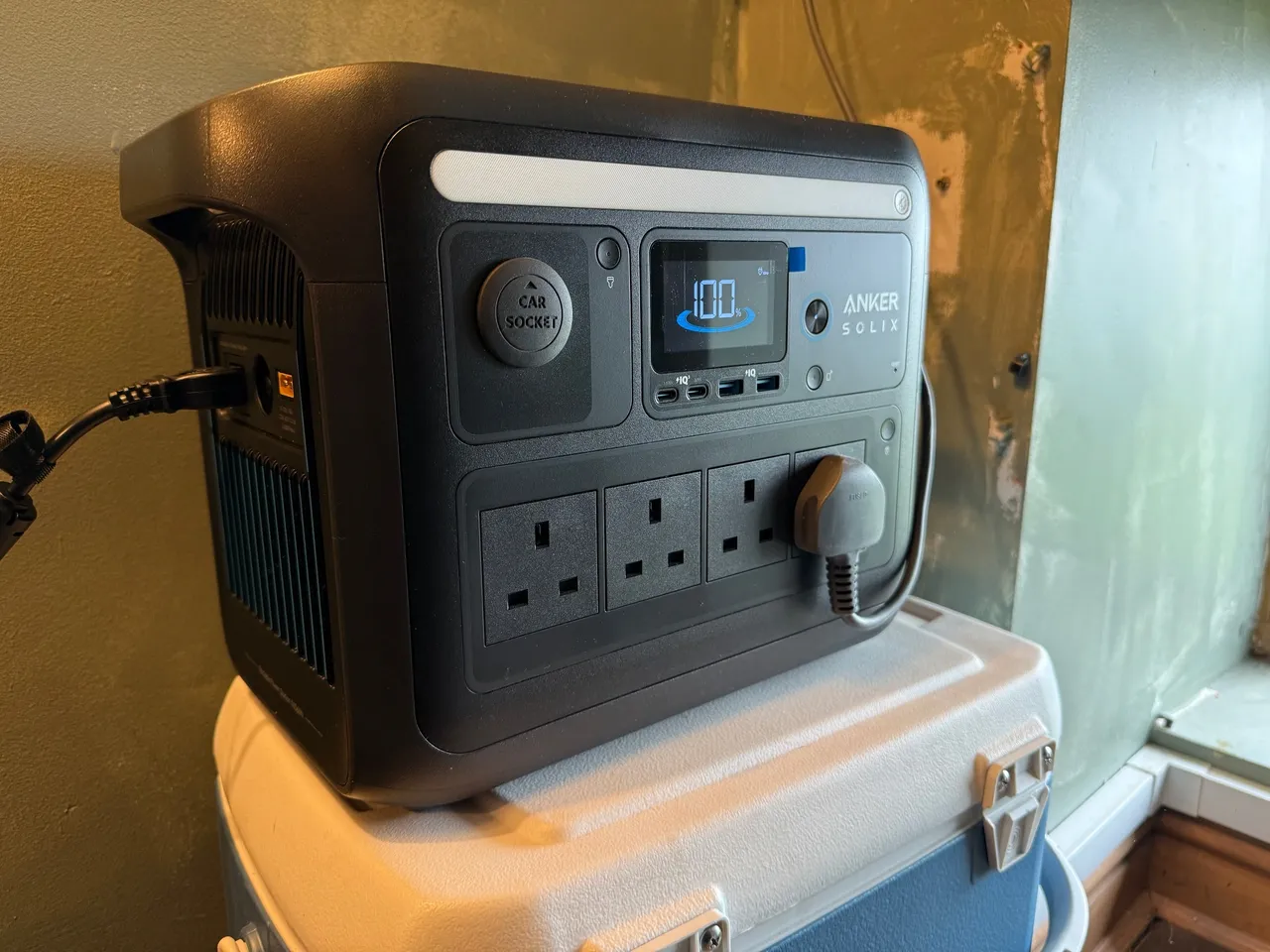
I’ve had my C1000 since May 2025, it has already kept my Starlink and office setup online through 6 power cuts
It’s portable and versatile, you can run power tools offgrid or even use it for car boot cooking
There is a newer version on sale, this one is heavily discounted and still more than capable
Anker are a high quality brand, you can trust this device not to damage your tech and to withstand normal use.
It has excellent solar integration, you can source your own panel and connect it easily
Rapid recharge time from the mains
Generous amount of sockets – USB C, USB A, 12v and 240v
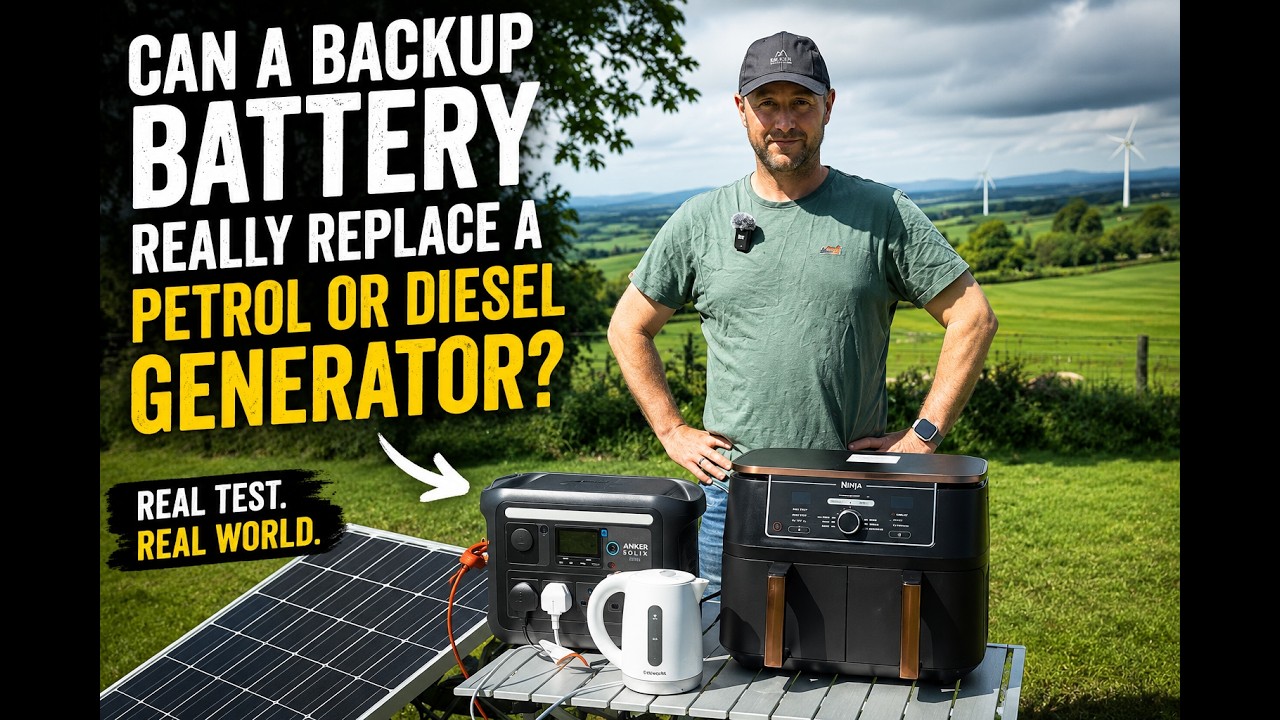
It won’t run a normal kettle – it trips out at about 2kw but it will run an air fryer or hot chocolate machine easily
If you are in the market for a backup battery / generator definitely put the C1000 on your shortlist, I am very happy with mine.
Situation – why we needed the C1000 in our lives:
We live in a house sat between four fields on the side of a hill in the Lake District. We are 4.5 miles from the closest shop, a similar distance in the other direction from a pub, and right at the end of the line for power supply. We still do not have fibre broadband.
All of this is great as far as I am concerned – in fact, it’s exactly what we were looking for when we moved here. It does mean we have to be able to take care of ourselves and solve problems on a fairly regular basis.
I am a professional remote worker. I do a few different jobs and they all depend entirely on being able to get online and operate IT equipment. I cannot earn without that infrastructure in place.
It was never really much of a problem until January 2025. Prior to that, we would have the occasional power cut, especially in storms, but by the time I had boiled the kettle on the gas hob, we were up and running again. In January, there was extensive damage to the high-voltage grid in Cumbria, and the recovery teams simply could not get around to all of them. We were off for just under 48 hours. Fortunately, it was at the weekend, so it did not affect work, but we did lose most of our frozen food, and it got us thinking.
I tried hooking an old camping inverter up to the battery of my Volvo with the engine running. It was enough to get the LED displays of the fridge-freezer to come on, but not the compressor.
I looked into getting a generator– petrol or diesel. You don’t really get much for less than £1,000, and then you have to keep it somewhere, replenish the fuel to stop it going off, and run it every month to keep it in good condition. It has to be outdoors when running, and not all of them are weatherproof. It’s another engine to service with oil changes, spark plugs, and so on. And the noise.
I thought about professionally installed house batteries – tempting, as I could benefit from cheap overnight electricity on Octopus. These systems don’t necessarily provide backup power in the event of a cut, and they are certainly not cheap.
Anyway, spring continued and I forgot about it for a while – until the electricity company wrote to me to say the power would be going off for repairs for the whole of a Monday in May. I made plans to work from my wife’s office. It wasn’t a great day – I felt in the way and I didn’t get much done. So I went back to making my own backup plan. A portable power station made so much sense for what I needed.
C1000 Specifications:
The Anker C1000 holds 1056Wh– one kilowatt-hour (kWh), in other words. That’s enough to run a 1kW electric fire for about 50–55 minutes, or a 100W light bulb for around nine hours once you allow for inverter losses. In my case, it’s plenty to run my Starlink setup, laptop, and external screens for seven or eight hours. If I wasn’t running my full complement of office equipment, it would run Starlink for a good 15–18 hours.Alternatively, you could use it to cycle the fridge-freezer every few hours and to run room lighting. If you’re wise with it, that 1kWh can go a long way and make the difference between surviving and being relatively comfortable.
The C1000 can deliver 1800W continuouslyand up to 2400Wfor a short surge. It can recharge to full in as little as 58 minutes, and the battery technology is good for 3,000 cycles to 80% capacity – roughly ten years of normal use. It has 9 output ports, including two USB-C, two USB-A, four 240V mains sockets, and a 12V car “cigarette lighter” style port. You can charge it from solar panels if you have them, and it will also accept input from a car 12V system. It comes with a car charging lead, some solar adapters, and a 240V mains lead.
I talked myself into the idea pretty easily in the end – no fuel to worry about, no noise, no maintenance. I also liked the thought of taking it on camping trips – not something you could sensibly do with a generator.
My Review:
I have had mine for a year now, so I feel qualified to give it a considered review.
I have used it “in anger” for six power cuts, one of which lasted 7 hours, it was more than capable of running my work setup. Several of the cuts we’ve had so far were short but featured the power coming off and on again a few times before stabilising – very annoying if your router has to power cycle each time before reconnecting. I found the C1000’s uninterruptible power supply mode very useful here. You plug the C1000 into the mains, turn it on, then plug your router and computer into it, and it prevents any issues when the mains supply flickers.
I keep the C1000 near our router with a long extension cable next to it. When the power goes off, I plug the router straight in. By the time I’ve run the extension to my computer, the Wi-Fi is back on and I can carry on with my day, only losing a couple of minutes.
I’ve found quite a few other great uses for it:
DIY – When doing electrical work with the power off, I can still run my drills, multitools, and lamps from the C1000. Ideal for chasing in new sockets and fault-finding.
Outdoor DIY – We own a little bit of land, and quite often I need to run a power tool out of range of the house. The C1000 has been more than happy to run drills, cutting tools, and a table saw out and about.
Leisure – I’ve run a Hotel Chocolat Velvetiser in the boot of my Volvo and provided hot chocolate to friends. You could easily run an air fryer from it too (though not a normal kettle – they’re 3kW).
Vehicle / machinery – the 12v “car cigarette lighter” output runs my tyre compressor, very handy if I’ve got more than one tyre to inflate or if I’m pumping up the tyres on my lawn tractor which does not have an outlet. The compressor draws about 120w and soon takes the edge of the vehicle battery whereas the C1000 drives it hard for as long as you need.
I’ve also been experimenting with solar power. I found an old 190W solar panel and was able to get a connector from Amazon for about £15. I was surprised how well it worked – the telematics on the C1000 showed it delivering up to 157W in direct sunlight. A larger 400W panel could recharge the C1000 in around three to five hours of good light. Even my small panel is enough to provide more than I use with my Starlink system and computer. If I was away camping, I think leaving that set-up would keep us in business for mobile phone and iPad charging for a week easily.
In normal use, I have it plugged into a smart socket in our wardrobe. I’ve set a reminder on my calendar to charge it up every three months or so, to make sure it’s ready to go when needed. It also means I can flick it on if it seems likely there’ll be a power cut.
The C1000 has a few other features that I appreciate. There’s a good smartphone app that lets you update the firmware, remotely turn it on, or read its telematics. This is very useful when it’s running, as you can keep an eye on remaining battery power and even the performance of your solar if you have it. I also like that you can set the mains charging speed – I’ve turned mine down to 400W to be gentler on the battery and reduce fan noise. If I was in a hurry, I could turn it up to ultra-fast. I never thought I’d use the built-in LED strip light, but I must admit, it’s been really useful a few times.
The unit itself is very well designed. It’s heavy, but it has two solid carrying handles at the top. It feels premium, built to last. I note that you can buy an extension battery to double the capacity if needed.
All considered, I am extremely pleased with my C1000 and I highly recommend it.
My own device is the first generation C1000, it is no longer on sale so my Amazon UK links will take you to the new model which looks even more impressive.
This piece first appeared on the Dull Men’s Club Facebook page, you can read it here I will re-write it into more of a blog post about the trip in due course…
In my humble opinion, you cannot beat sea kayaking for simple, honest, slow, decent enjoyment.
My last trip was a classic. Our boats were packed with 12 cans of beer, food and water for 3 days, camping gear, and a change of clothes.
We found a perfect uninhabited island off the coast of another island (which was itself off the coast of the British Isles). Is that a level 3 recursive island?
We camped on a strip of grass, lit a fire, drank beers, and watched satellites, stars, and meteorites.
On day two, we moved on and found ourselves ahead of schedule. As the sea was still, we decided to cross the mile and a half to yet another island. As we got closer, we were very excited to see that the lighthouse had been abandoned. A huge, rusting winch had started to fall down the cliff, and the outbuildings were collapsing in places. Many of the windows in the keeper’s house were missing their glass. The trees and vegetation looked rather too big for their setting.
We made our boats safe from the rising tide and climbed the 50 or so steps up the cliff face. The lighthouse must have been very important in its day, as there were several large stone buildings and two large, comfortable houses attached to it. One of the buildings still housed a substantial generator (see photo).
The house doors were all open, so we took a careful look around. I was fascinated to see a Wilkins-Servis Homepride washing machine complete with mangle. Next to it was a Hotpoint spin dryer. Almost everything else had been removed, aside from the odd bit of brown furniture and a dirty mattress.
We took a look at the lighthouse itself, and I noticed a rack of batteries the size of a van. It said “Don’t use acid” in bold letters—probably good advice.
There was no litter or graffiti; I guess the location must act as a big filter. I could have spent all week exploring it, but we had to move on with our plans. We did no damage and loved seeing the place. I have the utmost respect for the men and women who lived and worked there when it was a functioning lighthouse. It was an exceptional privilege to go back in time and see a little of their world.
The rest of our trip was pleasant and uneventful. Another night camping out, we paddled amongst some porpoises. A perfect antidote to daily stresses and petty concerns—I highly recommend giving it a try.
Thanks for reading. If you enjoyed this report, I’d love to hear from you — just drop me a comment below.
Used to distinguish new sessions and visits. This cookie is set when the GA.js javascript library is loaded and there is no existing __utmb cookie. The cookie is updated every time data is sent to the Google Analytics server.
30 minutes after last activity
__utmc
Used only with old Urchin versions of Google Analytics and not with GA.js. Was used to distinguish between new sessions and visits at the end of a session.
End of session (browser)
__utmz
Contains information about the traffic source or campaign that directed user to the website. The cookie is set when the GA.js javascript is loaded and updated when data is sent to the Google Anaytics server
6 months after last activity
__utmv
Contains custom information set by the web developer via the _setCustomVar method in Google Analytics. This cookie is updated every time new data is sent to the Google Analytics server.
2 years after last activity
__utmx
Used to determine whether a user is included in an A / B or Multivariate test.
18 months
_ga
ID used to identify users
2 years
_gali
Used by Google Analytics to determine which links on a page are being clicked
30 seconds
_ga_
ID used to identify users
2 years
_gid
ID used to identify users for 24 hours after last activity
24 hours
_gat
Used to monitor number of Google Analytics server requests when using Google Tag Manager
1 minute
_gac_
Contains information related to marketing campaigns of the user. These are shared with Google AdWords / Google Ads when the Google Ads and Google Analytics accounts are linked together.
90 days
__utma
ID used to identify users and sessions
2 years after last activity
__utmt
Used to monitor number of Google Analytics server requests
10 minutes
Jetpack's built-in visitor analytics. It records page views, referring sites, search terms, and outbound link clicks, and also carries the shared visitor-tracking library used by Jetpack Instant Search and WooCommerce Analytics.